Whispers in the Woods: 5 Very Spooky Trees To Spot This October…
If you are wandering through a forest this spooky season, look out for these five trees with a spooky history…
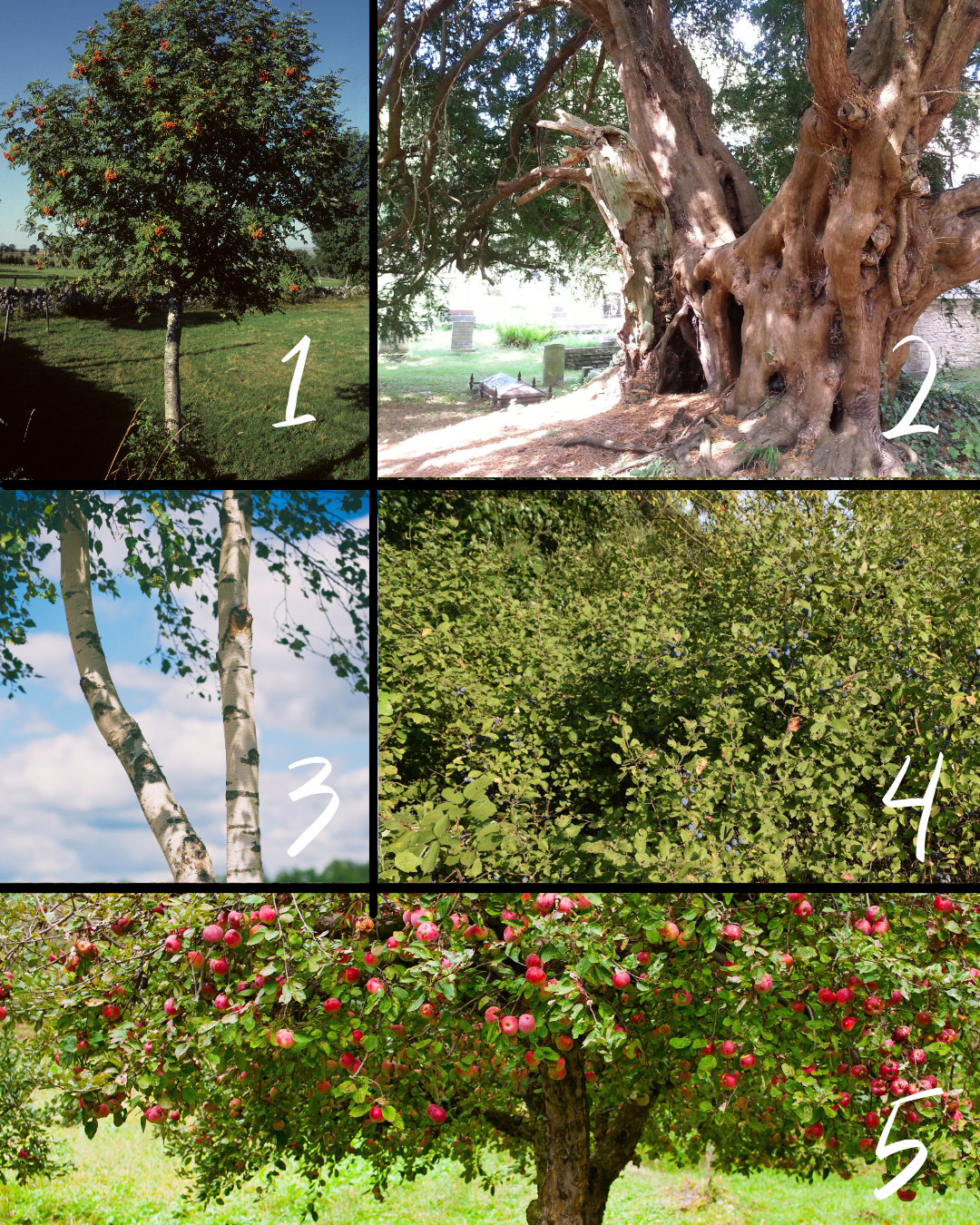
(1) The Rowan (Sorbus aucuparia):
Known colloquially as the ‘Witchwood’ or the ‘Wizard’s Tree’, the Rowan is easy to spot in October as their branches bear the weight of blood-red berries loved by birds. To protect households from curses on Halloween night, people would tie two twigs of Rowan together into a cross using red thread and hang it above the front door, barns and stables.
(2) The Yew (Taxus baccata):
Often found standing in British churchyards, these hollow evergreens can sometimes be even older than the churches they’re next to. The eldest yew tree in the UK is estimated to be between 2,000 and 3,000 years old and is situation in Fortingall in Perthshire. Yew trees are thought to have been planted in churchyards deliberately due to their association with immortality and the cycle of life and death, though this is widely debated.
(3) The Silver Birch (Betula pendula):
Silver Birch trees are easily identified due to their ghostly white bark. In medieval Britain, people would use bundles of silver birch twigs to sweep away dirt or soot. However, these brooms were also thought to sweep away spirits and negative energies.
(4) The Blackthorn (Prunus spinosa):
You will likely recognise the dark hedgerow bristling with sharp spikes. The scratches from its thorns are notorious for causing nasty infections, which is often thought to be why these trees are described as cursed in folklore. It was also told that witches would have wands and walking sticks made of blackthorn wood.
(5) The Apple Tree (Malus domestica):
The humble apple tree also has its own spooky folklore… It is warned to never cut an apple tree for its wood and to only use what has fallen, or you will suffer from bad luck. Not only this, but some British tales warn that the last apple on the tree should never be picked, as it belongs to the spirit of the orchard.